


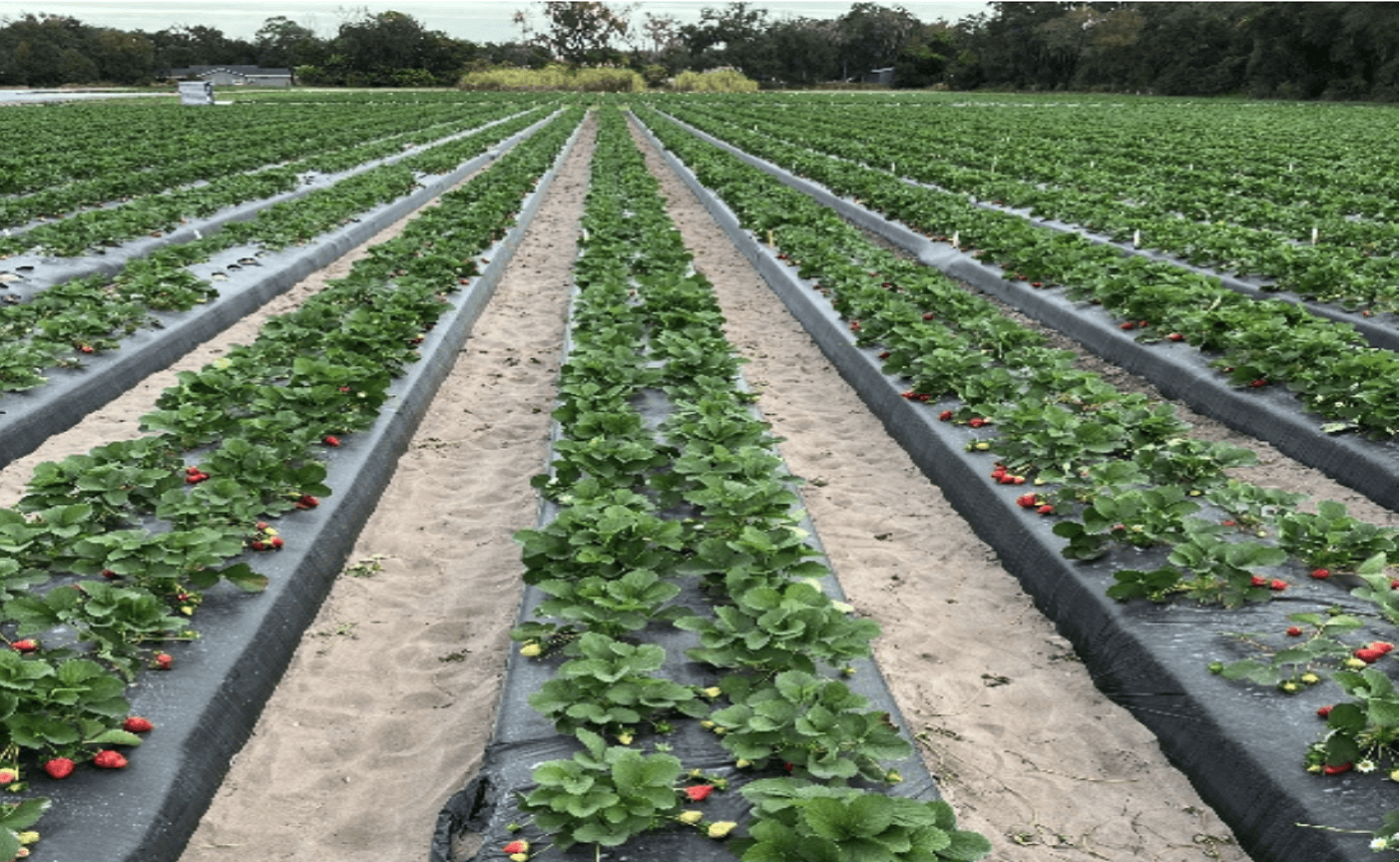
Trial Review: MaxCal + Sistema in Florida Strawberries
Plant City, FL – June 1, 2026
Florida strawberry production is no stranger to stress, especially during a season with repeated cold events. In the 2025–2026 Plant City, Florida strawberry trial, the combination of MaxCal + Sistema powered by BioXcelerator and Particus was evaluated against a grower standard fertility program. The results showed a clear advantage in marketable yield, berry size, and late-season plant vigor.
The program delivered a 9.5% increase in marketable yield by weight, equal to an estimated +2,359 additional pounds per acre compared to the grower standard. Treated plots produced 27,206 lb/acre, compared to 24,847 lb/acre in the control. Individual berry size also improved, with treated fruit measuring 33.6% larger than the grower standard.
One of the most important takeaways from the trial was that the yield gain was driven by larger berries, not simply more fruit. This matters because berry size has a direct impact on marketability, packout, and grower profitability. The trial also reported that fruit firmness, Brix, and color were maintained compared to the control, with no increase in disease pressure or cull rates.
Freeze Resilience Under Pressure
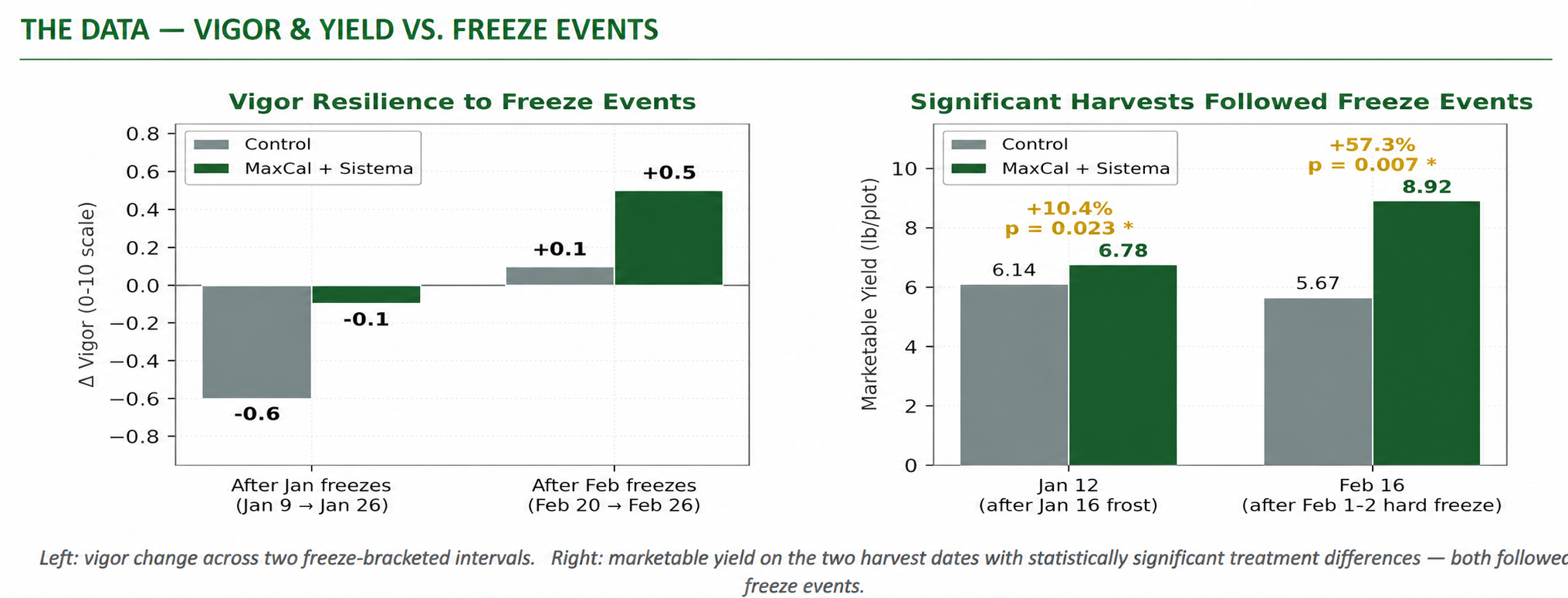
The season included multiple freeze events during the trial window, including a hard freeze of 25–26°F on February 1–2. Even under that pressure, the treated plants showed stronger resilience. During the January freeze cluster, the control declined by 0.6 vigor points, while the treated plants declined by only 0.1. After the February freeze period, treated plants gained +0.5 vigor points, which was the only statistically significant vigor date in the trial.
Post-freeze yield response was also notable. On February 16, roughly two weeks after the hard freeze, the treated program delivered the largest individual harvest advantage at +57.3% marketable yield compared to the control. This supports the idea that the MaxCal + Sistema program did more than increase yield under normal conditions. It also appeared to help the crop recover and continue producing after stress.
The Program
MaxCal provided a calcium, magnesium, and boron fertility source, while Sistema added a biostimulant package containing seaweed, peptides, fulvic acids, amino acids, vitamins, and other plant-supporting compounds. Together, the program supported both structural plant strength and stress recovery.
For Florida winter strawberry growers, freeze pressure is not an occasional concern. It is part of the production system. This trial shows that a calcium plus biostimulant fertility program can play a meaningful role in supporting crop resilience, maintaining quality, and improving marketable yield.